
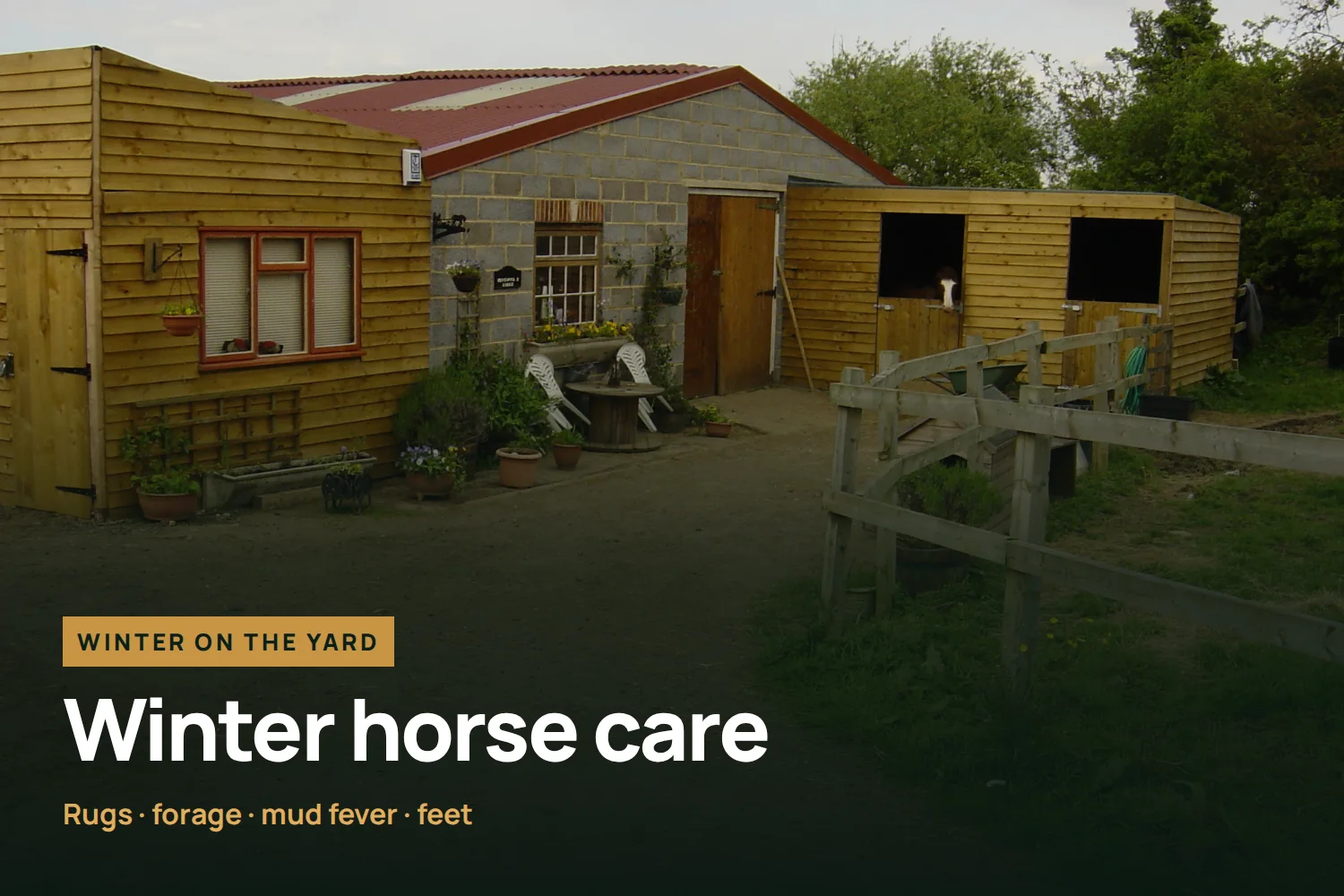
Short days, wet fields and cold snaps: winter asks more of horses and owners than any other season. Here’s how we keep horses happy, healthy and in good condition from November to March — and the small daily habits that stop little problems becoming big ones.
Rugs: less is often more
A healthy horse with a full winter coat, shelter and plenty of forage copes with cold far better than most of us think. The commonest winter mistake is over-rugging, which can leave a horse sweating, uncomfortable and even gaining weight it doesn’t need.
- Rug the horse, not the weather forecast. Clipped horses, veterans and poor doers need more help; an unclipped native often needs very little.
- Check underneath every day. Take the rug off, feel for warmth or sweat behind the elbow, and look for rubs on the shoulders and withers.
- Keep rugs dry and well fitted. A wet or ill-fitting rug does more harm than none. Have a spare ready to swap.
Forage first
A horse’s best heater is its gut: digesting fibre produces heat from the inside. Ample hay or haylage does more for warmth than an extra rug.
- Keep forage going through the day and night, especially when grass is short.
- Watch condition, not just weight. Run a hand over the ribs and topline every week — rugs hide a lot.
- Change feeds gradually. Sudden changes, less turnout and lower water intake all raise the risk of colic.
- Water matters as much in winter as summer. Break ice on troughs at least twice a day; many horses drink more when the water isn’t freezing.
Mud fever and rain scald
Mud fever is a bacterial skin infection of the lower legs, and wet, muddy conditions are its favourite. Rain scald is its cousin on the back and quarters. Prevention is far easier than cure.
- Check legs daily for scabs, heat, swelling or sore, greasy-looking skin — pink skin under white socks is most at risk.
- Keep legs as clean and dry as you can. Let mud dry and brush it off, or wash and dry thoroughly; never leave legs wet overnight.
- Rest the worst of the mud. Fence off poached gateways and rotate paddocks where possible.
- Call your vet early if you spot it. Treated quickly, it clears up far faster.
Feet
Wet ground softens hooves and loosens shoes. Pick feet out every day, keep an eye out for thrush, and keep to your farrier’s schedule — a lost shoe in deep mud can mean a sore horse and weeks off work.
Riding through winter
Keeping horses in work helps their minds and bodies through the dark months. Warm up for longer in the cold, wear hi-vis if you hack in fading light, and make the most of an all-weather arena — ours is floodlit, so work doesn’t stop at four o’clock.
How we do it at Pentonville Lodge
On full livery, every horse here is checked daily, rugs are changed as the weather turns, and horses are exercised so they stay fit and settled all winter. Short of time this winter? Our livery options start at £200 a week, and schooling livery keeps your horse moving forward with Nikki while you’re busy.
When in doubt, call your vet. Every horse is different — youngsters, veterans and horses with health conditions may need a different approach.
Nikki Ward · Pentonville Lodge
For the latest from the yard, follow us on Instagram · Facebook · YouTube · X.