
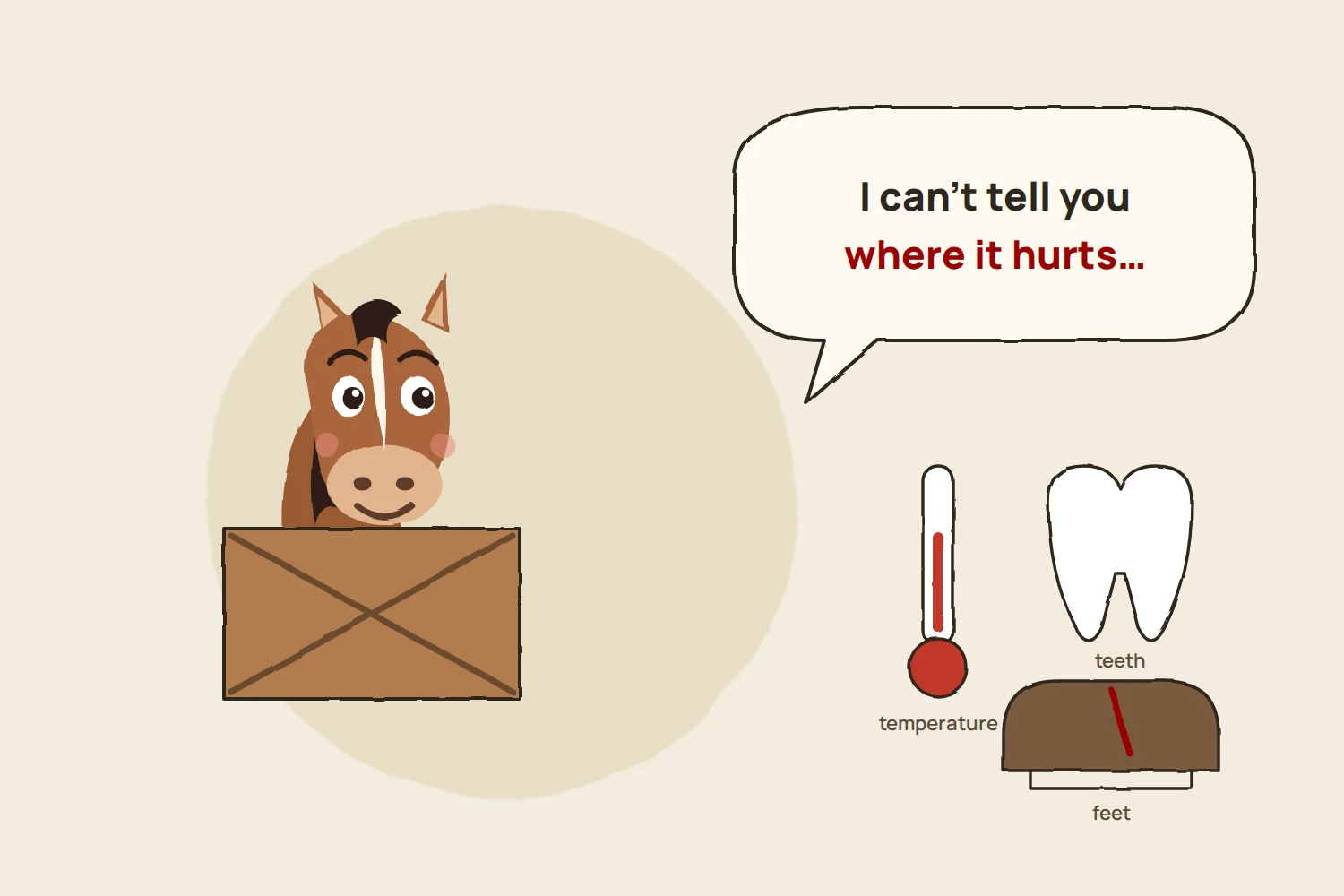
Horses can’t tell us when something hurts. As prey animals, they’re built to hide pain and weakness — so by the time a horse looks obviously unwell, a problem may have been brewing for a while. The good news: if you know what’s normal for your horse, you can spot the early warning signs and call for help sooner.
Know what’s normal
Check your horse’s vital signs at rest once or twice a month, and write them down. Fear, excitement, exercise and hot weather all push them up, so take them when your horse is calm. Typical ranges for an adult horse are:
- Temperature: about 37.5–38.5°C.
- Heart rate: about 28–44 beats per minute.
- Breathing: about 8–16 breaths per minute — count the rise and fall of the flank.
- Gums: pink and moist.
Every horse is a little different — that’s why knowing your own horse’s normal matters. Your vet can show you how to take each one.
The daily once-over
- Attitude: bright, alert and interested, or dull and standing apart from the others?
- Eating and drinking: has the haynet been finished, and the water drunk?
- Droppings: the usual amount and consistency?
- Eyes and nose: clear and bright, with no discharge, swelling or squinting?
- Legs: run your hands down each one, feeling for heat, swelling or cuts.
- Feet: pick them out, and check for stones, smells or anything stuck in.
- Coat and skin: lumps, bumps, rubs or patches?
Toothache — just like us
Horses get toothache too, and it’s easily missed. Sharp edges, a cracked tooth or an infection make chewing painful, so the horse eats slowly or drops food — and because it can’t get the goodness from its forage, it can lose weight surprisingly quickly. Watch for:
- Quidding: dropping balls of half-chewed hay.
- Slow or messy eating, or leaving hard feed.
- Weight loss that you can’t otherwise explain.
- Head tossing, fussing with the bit, or not wanting the face touched.
- Bad breath, a swollen face, or a smelly discharge from one nostril.
- Reluctance to drink cold water.
Have your horse’s teeth checked at least once a year by a vet or a qualified equine dental technician, and sooner if you see any of these signs.
Lameness and feet
A horse that’s nodding its head when it trots, pointing a foot, or reluctant to move is telling you something hurts. Feel the feet for heat and look underneath for stones or wounds.
- Something stuck in the foot? If a nail or sharp object has gone into the hoof, don’t pull it out — call your vet straight away. A puncture can reach vital structures inside the foot, and your vet needs to see exactly where it went in.
- Laminitis is an emergency: watch for a horse rocking back on its heels, reluctant to walk, with hot feet and a strong pulse at the back of the fetlock.
- Abscesses can make a horse suddenly very lame — often looking like a broken leg — and need your vet or farrier.
Colic: never wait and see
Colic means tummy pain, and it can be serious. Signs include pawing the ground, looking round at the flanks, lying down and getting up repeatedly, rolling, sweating, and passing few or no droppings. Call your vet straight away — don’t wait to see if it passes.
Other warning signs
- A cough, a runny nose or fast, laboured breathing.
- A temperature above your horse’s normal.
- Not eating, or not drinking.
- Wounds near a joint or the eye, however small.
- A change in behaviour — grumpiness when the girth is done up, new bucking, or a quiet horse turning sharp. Pain is often the reason.
When in doubt, call the vet
No vet minds a call about a horse that “just doesn’t seem right” — they would much rather hear early. Keep your vet’s number in your phone and on the yard noticeboard; our useful contacts page lists local equine vets. On full livery at Pentonville Lodge, every horse is checked daily by people who know them well — because the earlier a problem is spotted, the better the outcome.
Nikki Ward · Pentonville Lodge
For the latest from the yard, follow us on Instagram · Facebook · YouTube · X.