
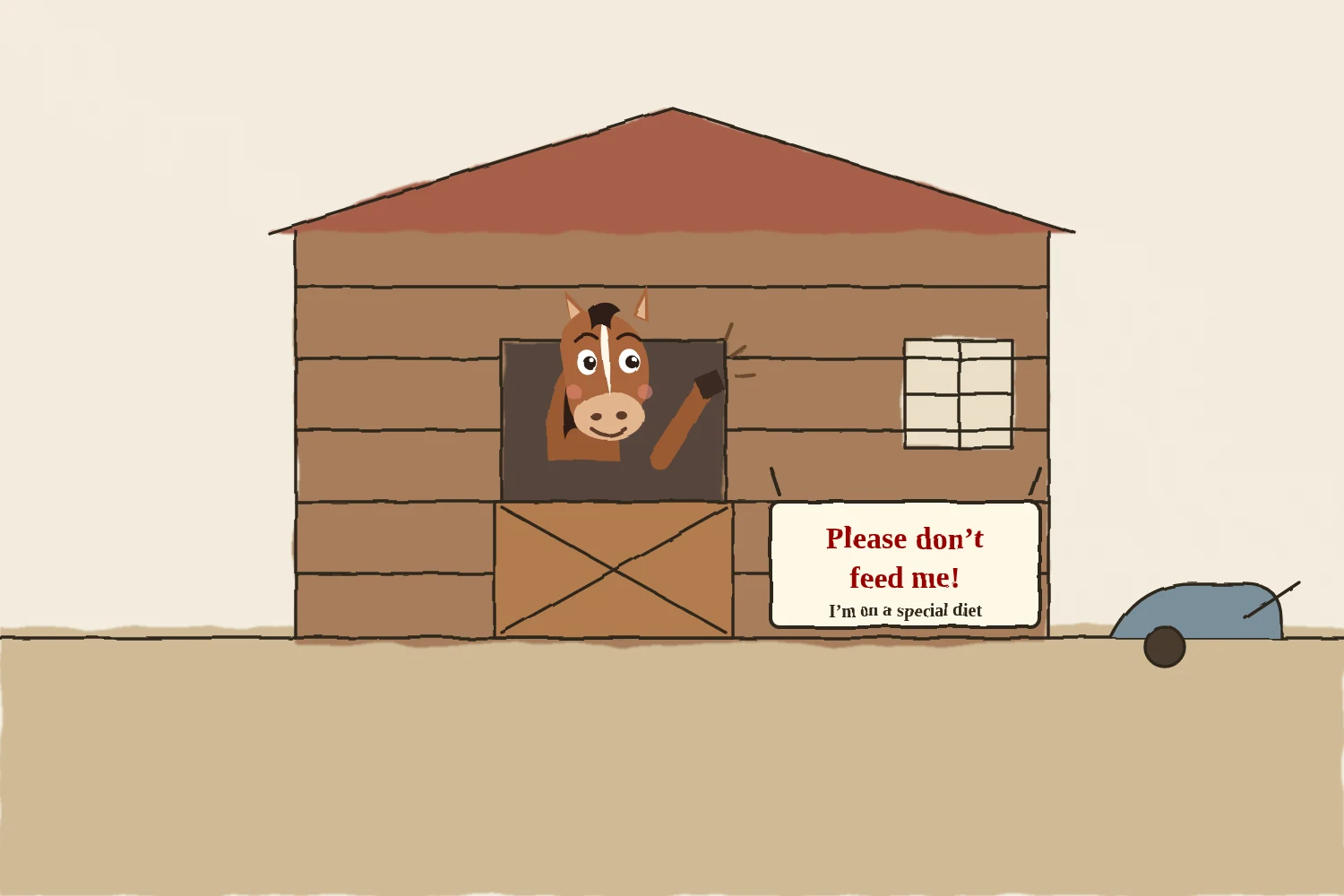
A busy yard is a wonderful place — horses, people, dogs, deliveries and the farrier all at once. It’s also a working environment, and most accidents with horses don’t come from bad luck but from small things overlooked. Thoughtful habits keep everyone safe, from the youngest visitor to the oldest hand. Here are ours.
A yard is a workplace
Health and safety law applies to horse yards just as it does to any other business. Yards should look at what could cause harm and put sensible precautions in place, keep a first-aid kit and an accident book, and train the people who work there. Certain serious injuries at work must also be reported to the Health and Safety Executive. None of that works, though, unless everyone on the yard plays their part.
Please don’t feed the horses
It’s the kindest instinct in the world — and one of the most common mistakes. Never give a horse a treat without asking its owner first.
- Special diets: some horses are on strict diets for laminitis or other conditions, where a handful of the wrong food can make them seriously ill.
- Allergies and medication: some horses react badly to certain foods, and some are on feeds that mustn’t be mixed.
- Choking: apples and carrots should be cut lengthways, never into round chunks.
- Nipping: horses fed by hand can learn to nip and push for food — which is how children get bitten.
- Never feed grass cuttings or garden waste — they can cause colic, and some garden plants are poisonous.
Around the horses
- Approach calmly from the front and side, towards the shoulder, and speak so the horse knows you’re there.
- Never walk directly behind a horse, or duck under a lead rope.
- Lead on the horse’s left side, and never wrap a rope or lead round your hand.
- Tie up with a quick-release knot, to a breakable loop of string.
- Don’t go into a stable or field unless you’ve been asked to.
Children on the yard
- Always with a responsible adult, and within sight.
- Walk, don’t run, and use quiet voices — horses startle easily.
- Sturdy shoes or boots always, and a riding hat when riding or handling young horses.
- Fingers away from stable doors and mouths; if a treat is allowed, offer it on a flat palm.
- Wash hands after touching horses, and always before eating.
Dress for the job
Strong boots that protect your toes, gloves when leading, hair tied back, and no loose scarves or dangling jewellery. A riding hat to current standards whenever you’re mounted.
A tidy, safe yard
- Gates: close every gate behind you and check the latch.
- Tools: hang forks and brooms up, or prop them tines down, and put wheelbarrows away — trip hazards cause more injuries than you’d think.
- Haynets: tie them high, so legs can’t get caught.
- Winter: grit icy walkways, and take extra care on wet concrete.
- Lifting: feed bags and full water buckets are heavy — bend your knees, carry loads close, and share them.
Fire
Hay and straw burn fast. There’s no smoking anywhere on the yard, ever. Keep hay and bedding stores away from the stables, know where the fire extinguishers are, and know the plan for getting horses out.
Vehicles and machinery
Drive into the yard at walking pace. Horseboxes and trailers need someone to guide them when reversing, and machinery is for trained people only.
Hygiene and horse health
- Some infections, such as ringworm, can pass between horses and people — wash your hands after handling horses and before you eat.
- Don’t share buckets, brushes or tack between horses without cleaning them.
- Tell the yard straight away if a horse seems unwell — a cough, nasal discharge or a swelling can matter to every horse here.
- Keep wormers and medicines stored safely, away from children and animals.
Dogs
Dogs are part of yard life, but a dog running loose can spook a horse in a second. Keep them on a lead and close to you unless the yard says otherwise.
If something goes wrong
Know where the first-aid kit is, and give the yard postcode — EN9 2LU — if you call 999. Report every accident or near miss to the yard so it can be recorded and learned from. Our useful contacts page has emergency numbers and local vets.
At Pentonville Lodge
Please speak to Nikki or the yard team when you arrive, keep children with you, and follow any instructions you’re given — it’s how we keep horses and people safe. Our terms set out the rest. Thank you for helping keep the yard a happy, safe place for everyone.
Nikki Ward · Pentonville Lodge
For the latest from the yard, follow us on Instagram · Facebook · YouTube · X.